Tag: relationships

  • let desire show you what needs to be healed.

    the new moon is in libra, a time to set intentions about the kinds of relationships we really want and commit to the healing, repair, and everyday practices necessary to co-create these relationships. as a libra stellium who loves to love, this is my time.

    i had an experience recently that felt like falling in love. i wondered to myself: why does this feel so familiar? so intense? some moments felt like i’d gone back in time, to past moments in my life, picking up right where i left off. consciously, i knew a relationship with this person, under these circumstances, wasn’t aligned with what i wanted. somatically, i felt pulled toward them anyway.

    i told myself: it’s just a fantasy. sexual attraction. something to be contained. and my body replied: but goddamn i want it so bad.

    in dean spade’s “love in a fucked up world,” he writes about how to deescalate crushes that aren’t in alignment with our conscious principles. spade writes, “What we need is a way to return to a sober assessment of the situation, to remind ourselves of the buzz-kill realities that make this emotional/behavioral pattern something we are trying to break. Killing buzzes may sound like a bummer, but in this case, it’s about getting back to reality so we can find actual joy and pleasure rather than drama, shame, and conflict.” i followed the advice, reminding myself of why i wasn’t pursuing this crush. but something about this guidance felt off.

    instead of investigating why we feel the way we feel, spade seems to encourage readers to override our feelings, using our minds to control our bodies to try to make undesirable feelings go away. as a somatic coach and mental health worker, i know the feelings we don’t want to feel don’t just go away when buried.

    in my practice, i use internal family systems (IFS), more commonly known as ‘parts’ work, which pulls from many existing practices. the idea behind IFS is that we’re made up of many parts; past versions of ourselves get frozen in time replaying patterns that aren’t necessarily aligned with who we are, or want to be, now. some parts are protectors, and some are exiles. the feelings we don’t want to feel are exiles. often, exiles are our sadness, our pain, our deepest fears, our unwanted desires. we push them below the surface where they can’t easily reach us, because we fear they will debilitate us if freed. we deny and disconnect from these feelings, or exile them.

    our protectors are then divided into two types that work to keep the exiles at bay: managers and firefighters. the managers take control, keep us functioning, and keep us distracted from exiled parts with habits like overworking and caregiving. managers act proactively to prevent us from feeling our pain, usually with habits we appreciate. firefighters then react when we can no longer contain our exiled feelings.

    dean spade seems to be asking us to manage our feelings of desire. the problem with that is, when our feelings become too much to manage, our exiled parts get activated by being pushed away and our firefighters jump out to…put out the fire. firefighters rebel against being managed; they may take drastic actions that have real consequences, like excessive substance use, binge eating, or risky sex. our firefighters come up when we’ve been trying to suppress exiled feelings for so long, and we just can’t do it anymore, so we find other – often much more reckless – ways to disconnect and stop ourselves from feeling those feelings.

    instead of managing or disconnecting from our feelings of desire, i want to offer a secret third thing: we have to tend to what’s coming up. we can accept, embrace, and explore our desires without acting on them (though this is arguably way less fun). so i asked myself: “what if my desire isn’t wrong? what if it’s showing me something i need to know about myself?” and if so, what does my body want me to know?

    i let myself have the crush. i envisioned a way to bring my feelings into alignment with my principles, and i told the person how i felt and what i wanted. even if it wasn’t something that could happen, i had to allow myself to want it. this was my gift to myself.
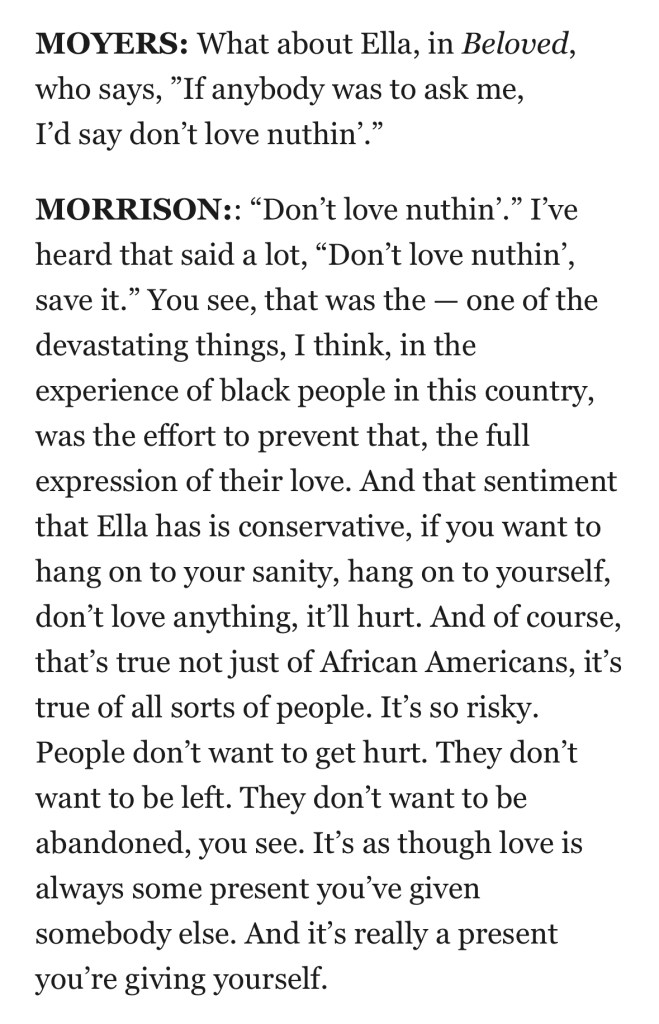
    over time, it became clear what was so familiar about the dynamic i’d [re]created with this person. working with my somatic coach, i came to recognize i was replaying an old script, acting out an old wound. with her support to bring attention to the wisdom held in my body, i explored the question: why is this feeling so intense? meditation brought me back to a memory from when i was 15, when i learned my mother had regained custody of me a year earlier, but had only taken my siblings back. she left me in the foster system until one night she showed up to have me institutionalized. when the police officers asked her why she left me, she said, “because i never wanted her.”

    i was destroyed. and in that moment, in that meditation, i felt destroyed all over again; i cried like i hadn’t cried for decades, releasing pain that had been buried. and this exiled feeling only became accessible to me when i learned to embrace my desire.

    this is where i return to align with dean spade, who writes, “Sometimes we are attracted to people because of the ways that they remind us unconsciously of our childhood caregivers (parents, older siblings, grandparents, foster parents). Unconsciously, we hope to recreate a similar situation with a different outcome.”

    my desire showed me that an exiled wound, a part of me that just wanted to be loved by someone who couldn’t love me, was calling for my attention. and i wasn’t going to heal by replaying this script, reenacting this trauma in a way i have many times before. the way to heal is to grieve and nurture relationships where i can truly feel and be seen, and known, and wanted. not just because of an attraction, albeit one that felt deeply familiar to me, but because i let them in, through connection earned over time with consistent acts of “care, commitment, respect, knowledge, responsibility, and trust,” as bell hooks defines love in all about love.

    so, for my 36th birthday, i decided to honor that desire to be seen and known by people who have shown me love. i decided not to have a party, because, as much as i’ve loved the parties i’ve gotten to have, sometimes it can be difficult for me to truly connect in a large group of people. right now, i’m not interested in just adding people to my life; i’m interested in deepening my relationships. i invited friends to set up time to engage in trust building exercises with me, and it’s been such a beautiful adventure to see what people come up with and share with me.

    on these trust dates, my friends and i have been crafting, collaging, creating, writing, walking, and painting. we’ve been asking and answering each other’s questions about each other – our pasts, presents, and futures – and about our relationship. i’ve been able to see parts of my life through new frames, through the interpretations of the people i know and love now. and in these friendships, on these dates, i have felt so seen, known, and loved, in exactly the ways i’ve been craving.

    i feel so grateful to be creating love and nurturing intimacy in relationships where i feel connection, reciprocity, and alignment. i feel so grateful to be learning from desire and choosing to heal.

  • “Children are the ways that the world begins again and again.”

    i have said before that i often struggle with building intimate and especially romantic relationships with adults, but i have really wonderful loving relationships with children. i have wondered in the past why that is, but it hit me this week that i know exactly why.

    i don’t ask for a lot from partners in terms of time, or money, or binding contracts; all those things have been offered to me in abundance. if i wanted something tangible, i believe i could have it.

    i ask for a lot in terms of authenticity and care. i ask people to part with social scripts about what relationships should look like and how people should behave. i ask people to be themselves and to accept all of me, slutty and silly and traumatized and mentally ill. i ask people to learn the ways trauma has shaped me and carve out new ways of interacting that will heal my wounds. i ask people to learn how trauma shapes them too, and to teach me how to love them in the places where they feel most unlovable. i ask people to take risks that i know must feel so destabilizing, because there are real costs, and i know this intimately, because i have had to pay those costs. i have lost friends, i have been abandoned by family, i’ve been institutionalized. but for me, the greatest cost of all would be to lose my sense of self.

    to lose myself again, i should say. because i have dedicated the past 5 years to the intimate archival project of recovering parts of myself that had been lost in bargains i had made to survive in this world.

    and children have no expectations about what the world should be or how they should exist within it; children only have a limitless imagination about what’s possible, that sometimes adults stifle when they impose gender norms, and when they tell kids to be quiet and stay still, and when they try to steer kids in the directions they believe to be most practical or fruitful or valuable, and when they push kids to perform when their bodies are telling them they need to stop. and on all of these questions, i’m with the kids asking:“why?”

    i’ve talked a lot with friends about my desire to have another baby, and people often wonder about how much it makes sense to bring new life into this world we’re losing to climate catastrophe and fascism and greed. and it doesn’t make sense at all, and that’s exactly the point. it never really makes sense to bring life into this world; it’s so expensive, and you don’t get enough help. these were the reasons i spent so much of my life feeling like i wanted to die; living just didn’t really seem like it made a lot of sense. here in the belly of the beast, we don’t live in a context that supports life.

    by seeking to bring life into the world, and by choosing to stay alive myself each day, i am banking on the next world. i am trusting that there will be a future and the future will be so queer, and trans, and disabled, and Black, and Indigenous. that there will be love and care in abundance! i am trusting that the world is still in progress, the future is still being created by the actions we take here and now.

    i wonder if this is what june jordan meant when she wrote, “Children are the ways that the world begins again and again.”

    my last suicide attempt was in October 2012, and within a year, i was pregnant. every day of my pregnancy, i bargained. i told myself, “i’ll kill myself, but for now i’ll take prenatal vitamins for the baby, just in case. i’ll kill myself, but i’ll buy this beautiful stroller on sale, just in case. i’ll kill myself, but i just want to meet the baby first.” and then every day i stayed, and i met the baby, and i fell in love with the baby, and i chose life because i had such a deep fulfilling love in my life.

    and learning to love was how i learned to live. and raising Black queer trans and disabled kids, and just letting them be exactly who they are, is how i am continuously learning to love myself. it doesn’t make sense, but it will make perfect sense in the future that i’m creating.

    a friend asked me my ideal way of bringing another baby into this world, and i said, “through magic.” and i really am holding out for that.

    i would be remiss to share this post about children and the future without also offering ways to preserve both for anyone who might be reading. Palestinian children and adults are being starved in Gaza by the US-backed Israeli genocide, and the Sameer Project is on the ground distributing food and supplies. I am also fundraising for the Safer Movements Collective where we provide emergency microgrants to Black queer and trans people in our cohorts to cover basic needs like housing. we need to care for our people, our kids, our land, here and everywhere if we want to make a revolution.

    please give to the Sameer Project!

    and please give to the Safer Movements Collective!

    musings and things i’ve engaged with these past few weeks that have informed my thoughts here:

    songs i have on repeat:

    • “worth it” by raye
    • “white flag” by dido
    • “naked” by ella mai

  • keeping repair possible

    around this time last year, i read june jordan’s “on call: political essays,” which was deeply resonant and impactful for me as i considered my choices about which relationships and political formations i wanted to pour my time and energy into. in it, jordan writes, “the ultimate connection cannot be the enemy. the ultimate connection must be the need that we find between us. it is not only who you are, in other words, but what we can do for each other that will determine the connection.” i’ve continued to sit with this lesson, especially as i’m navigating changes in my relationships and changes in myself. i’ve expanded my capacity for intimacy and vulnerability over the past few years, but i still find myself struggling with trust and trying to find the perfect set of ingredients that will make trusting more possible for me.

    alignment is one of those ingredients. and i know now that alignment can mean so many things: shared need, shared values, shared purpose, shared politics, shared experiences, a shared vision for the future. alignment can be a foundation, something like: we’ve come together because we’re aligned around these values or this vision, and we can build and keep each other accountable from here. but it also has to be a practice: we know we don’t quite know everything, but we have a shared vision or purpose, and we’ll keep trying and communicating and messing up and trying again as we learn to come into alignment with each other.

    but the devil is in the details, and this is where a shared vision often falls apart. we can all want the same things – like shared living and shared care – but where and how and who does what? and what happens when you find out in the process that there are more, different, even conflicting, needs than you accounted for? i had a vision with friends several years ago as i was deciding where to move: we all wanted to live amongst Black queer and trans radicals and support each other through the rise of fascism. at some point, i made a spreadsheet to get clear about the details: where could we go? what could we afford? what were those areas like? what was accessible? but i was the only parent in the group, so i also had to consider things the others didn’t have to think about: what schools are available? what kinds of activities were available for young queer and trans kids? will there be access to gender affirming care? as someone who grew up in new york city, i never learned to drive, and so in the process i recognized that i felt very anxious about starting a life in a suburban or rural area. i started taking driving lessons, but i wondered: do i really want a life where i need to rely on a car every day? and what kind of work will be available to me in a suburban or rural area?

    how many big leaps am i able to take at once?

    without getting into all the conversations that happened, and all the delays and changes along the way, i realized that only i was willing to account for the needs of my child; i made a decision. i moved to philly, a place i’d been a thousand times that was close to places that i considered home and where my family had roots.

    in many ways, this group had shared politics and shared values, but we didn’t necessarily practice our values in the same way. when i’ve reflected back on my experiences in relationships and collectives i’d been a part, i’ve come to understand that the different ways we practice shared values tends to be the place where we experience conflict. what i’ve learned from this is to be specific. yes, we might all call ourselves prison abolitionists, but what does that mean to you? what does it look like in your daily life? who are you specifically considering as you practice abolition? where might your politic, and practice, need to grow?

    this experience also taught me that shared politics don’t hold us together as well as shared need: when we really need each other to survive, we find a way to make things work. we have to talk, and we keep showing up for each other even when we’re angry. we learn together, we accept what’s different about each other, and we’ll work to move closer to alignment in values over time.

    what’s difficult about where i’m sitting is that i’ve found that many people who have the theory don’t quite have the practice down, and many people who have the practice don’t quite have the theory, and yes, i can study theory and refine practice at the level i want on my own, but god that isn’t nearly as much fun.

    i’m committed to my relationships, and i want to sustain them, and one of the questions i’ve been sitting with is: how do i sustain them for the long term? i say this as someone who does have many long-term relationships: i’m an auntie for the babies of two friends from high school, i still communicate with several former partners on a regular or semi regular basis, i wish my best friend from middle school a happy birthday every year, and not long ago i reviewed a cover letter for my best friend from third grade. not having a stable sense of family has meant that i hold my friends close as family. i have many long-lasting relationships in my life. i don’t struggle with keeping relationships long term; where i struggle is with allowing my relationships to change. the ones that have changed have sort of changed organically, without a conversation, and maybe that’s how it’s supposed to happen, and maybe i’m overthinking it. but what do you do when you know a change is needed but you just don’t want things to change?

    i desire constancy. and i know, i know, like octavia butler told us, the only constant is change.

    there’s a chapter in prentis hemphill’s book, what it takes to heal, called “remapping relationships.” they write, “ruptures should inform the shape of relationships going forward. we should relate differently based on what’s happened, now that we’ve learned something about who the other actually is and who we are. if not, we risk falling into the same patterns that didn’t work before.” i know this to be true. believing in transformative justice doesn’t mean allowing people to walk all over you or abuse you. it doesn’t mean that you have to do repair work with everyone, regardless of the power dynamics. quite the opposite, it means practicing discernment and practicing good boundary setting.

    it’s only in recent years that i’ve become more comfortable with the practice of ending relationships and holding firm boundaries. there’s always a doorway where someone i have loved can reenter my life, but i am no longer waiting at that doorway, and i am no longer chasing repair. yes, people change, but not always on my timeline or in the direction i want. bell hooks’ writing helped me with the practice of boundary setting, especially starting with my mother. in all about love, hooks writes, “Practicing compassion enabled me to understand why she might have acted as she did and to forgive her. Forgiving means that I am able to see her as a member of my community still, one who has a place in my heart should she wish to claim it.” i can forgive the past, and there are still things i need to stay in connection, to stay in relationship. without those needs met, i can still love you, from way over here.

    i talked to a friend recently about needing change in one of my relationships, and beginning to doubt that the friend i love has the will or ability to change in the ways i need. the repeat ruptures are wearing on my capacity to stay in connection. but i love my friend so much and i don’t want to lose the connection. my friend mentioned a concept that applies to buildings, but can also apply to relationships: retrofitting. it sounds similar to what prentis hemphill was writing about when they talked about remapping our relationships. with what we know now, and with what has happened, how does the relationship need to change?

    holding on too tightly to what once was is a recipe for disaster; it’s avoidance, it’s denial, it’s an idealizing that doesn’t want to see or believe truth. holding on won’t save my relationships. when i accept change as the only constant, i can tap into the hope and curiosity for what’s possible for the relationship moving forward.

    and yes, i’ll need to tend to grief, too.

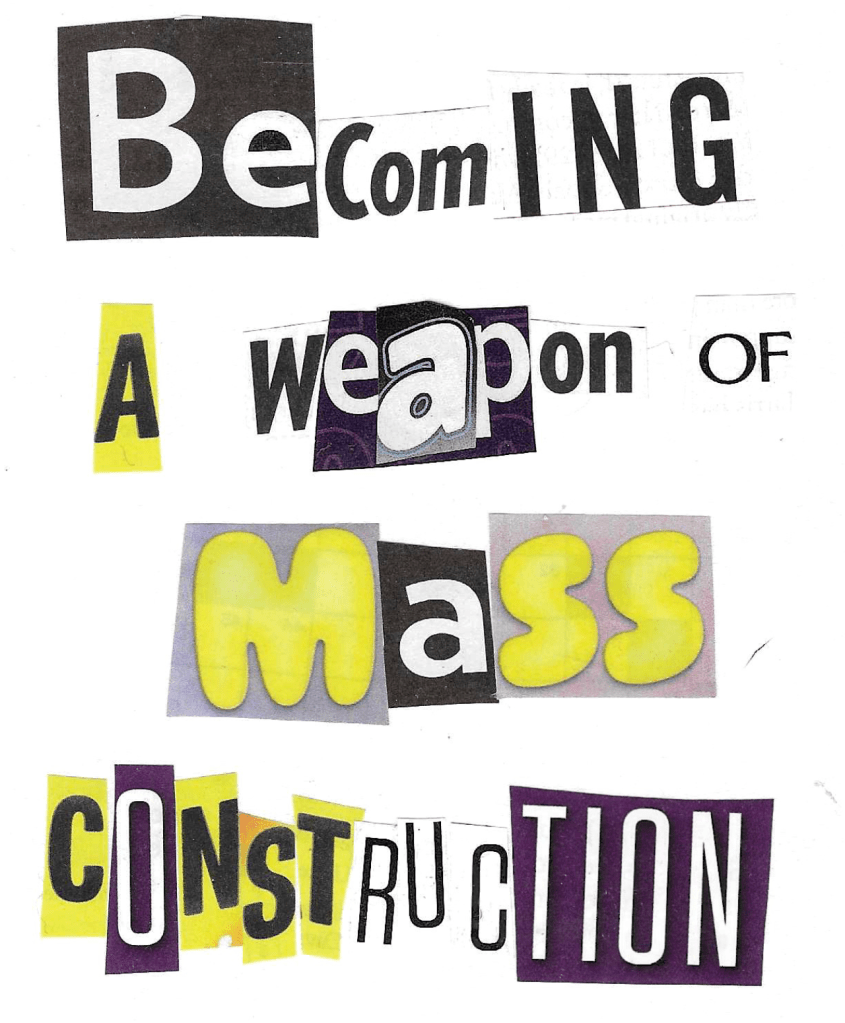
  • becoming a weapon of mass construction

    relationships are incredibly important to me. when there’s little else i can count on, i pour my faith into my relationships to carry me through difficult times. i recognize relationships as critical sites of transformation, healing, and liberation work. my intimate relationships have also been sites of violence, betrayal, and trauma. oppressive systems shape our everyday lives, down to the ways we relate to each other. it’s in the air we breathe. as i wrote five years ago, i’m still learning to breathe in this polluted air and exhale in a way that heals. i’m sure this learning will be lifelong.

    i think about healing as interconnected with collective liberation. i’m guided in part by the words of assata shakur who said, “we must be weapons of mass construction, weapons of mass love. it’s not enough just to change the system. we need to change ourselves.” it’s not enough to know what we want to destroy and dismantle; we also have to envision, and learn, and practice what we want to create. this blog, relearning relationships, is a space where i hope to document some of my process of learning and practice. i hope it will be a space where i can share and learn.

    after being doxxed and relentlessly harassed for speaking out against abuse in organizing spaces in 2020, i needed to reevaluate my relationship to the internet. over the past few years, i’ve kept most of my thoughts in a written journal that’s just for me. i use my journal to process my experiences, clarify my values, keep myself accountable to those values, and document my growth. i use it as a reference point when i can’t remember things. i live with complex trauma and bipolar disorder, and for me that means some memories are difficult to access, especially when i’m activated or in a heightened mood state. journaling has been a grounding practice for me, so i’m keeping this practice up at home. i also miss sharing through online journals, because i love how they open me up to more connection, feedback, and growth. so, after five years, i’m back to sharing online through this blog: relearning relationships, where i’ll share about what i’m reading, what i’m reflecting on, and my practices for (re)learning ways of relating that i hope will move me/us closer to liberation.

    for those of you who are meeting me through this blog, hello! i’m zara. i’m a 35 year old Caribbean mama of Black & Arab descent. i’m a transformative justice practitioner and a conflict mediator with a libra stellium. i’m a longtime organizer and a survivor of intimate partner abuse, child abuse, and state violence.

    my name is a chosen name; it’s an homage to a loved one and to the surname passed down to me at birth. i use it to mark where i am now in my journey. as a survivor of child abuse who was displaced by the family policing system, running away is a strategy that has helped me survive again and again. in leaving behind the options that were offered to me by birth and by the state, i was able to create relationships, and especially friendships, unlike what i’d ever experienced. relationships where there was a mutual commitment to care, connection, justice, and reciprocity. and in recent years, i have felt a pull to return: return to the place of my birth, return to the lands and cultural practices of my ancestors, return to parts of myself that once felt like they needed to be hidden or cast away to survive to this point. it feels like i’m retracing my steps and the steps of my ancestors to gather all the missing puzzle pieces, to feel whole. my name, my chosen name, seeks to honor both where i’ve come from and what i’ve created.

    not all my relationships have been marked by this commitment to care and connection and justice and reciprocity. in my sexual and romantic relationships, i have repeatedly recreated/re-experienced the abusive/oppressive dynamics that were most familiar to me as a child. these repeat experiences, most recently in 2019, have led me to distrust my own desire, to interrogate romance, to pursue sexual relationships that feel more like friendships, and to have firm boundaries around sex with people i rely on for care. i haven’t made decisions about how much of this i want to change. for now, i just acknowledge that this is where i’m at right now.

    as a teen sex worker, my relationship to sex was intertwined with my access to housing and basic resources. i learned through my experiences that i needed to be desirable to get my needs met. i didn’t have a consistent or reliable parent figure, and what i learned from sleeping outside was that the only people willing to take me in were men who wanted to have sex with me. these were the people i relied on to buy me groceries and winter coats. at 18, when i first sought out therapeutic support to tend to my experiences of sexual trauma, it didn’t tend to this specificity: the problem wasn’t really sex; it was the vulnerability that came with being isolated, abandoned, and homeless. sex was my survival strategy, and surviving this way made me vulnerable to violation.

    i’ve often felt unguided and unsupported in my healing work; there are few spaces and practitioners that have made me feel seen and understood in my experiences of trauma caused by state and interpersonal violence. when i do find practitioners, i often don’t have the resources to continue to access them. i know this to be true for many others, and this is what led me into my own practice, and study, and creation of resources & wellness spaces. in 2024, i co-created a zine on criminalized survivors’ healing from the traumatic impact of state and interpersonal violence and for the past five years, i have collaborated with Sequoya Hayes on a healing justice project called the Safer Movements Collective.

    a lot of my own healing work happens through reading, study, and connecting with different practitioners that i’ve found supportive, especially Kesha Fikes at Somatic Extimacy, Siedeh St. Foxie at Parama Collective, & Leslie Priscilla at Latinx Parenting.

    there are two main books i’m reading right now about healing & relationships: healing sex: a mind-body approach to healing sexual trauma by staci haines and what it takes to heal: how transforming ourselves can change the world by prentis hemphill. both focus on embodiment, or coming into our bodies and feeling our sensations, as a pathway to healing and transformation. although it’s often white folks who are credited for somatics, or the study of bodies and the sensations we use to know how we feel or what we need, African and Indigenous communities have historically understood healing in this holistic way, as something that happens in the bodymind to use the language of disability justice collective Sins Invalid. i appreciate prentis hemphill’s writing that, “Somatics, in a way, is born from the original fracture that separates us all into feeling and non-feeling, wild and civilized.”

    all of that said, mindfulness, meditation, and embodiment haven’t always been possible for me. for many of us living with complex trauma, it isn’t safe to be embodied. we’re using every strategy we’ve got to escape feeling what we can’t bear or what we simply don’t have the resources – both internal & external – to tend to. prentis hemphill writes about this too; they write, “We numb with all the coping strategies we know: work, alcohol, drugs, sex, food, social media, and any other activity humans do that can be made into distraction or an eject button to leave our bodies.”

    in recent years, i’ve learned many ways we can build our internal resources to meet ourselves in the places where we hold pain: honoring the needs & experiences of our inner child(ren), play, rest, tapping into past experiences of joy. i really appreciated this 3-minute resourcing practice offered by camille sapara barton. and i know that these practices are limited: nothing resources us as well as having our material needs met, having housing stability, having food and light and community. so many of us are living so precariously that building our internal resources can sometimes feel so out of reach. we need a foundation to build on.

    i am grateful to have known people in my life who have found ways to resource themselves, to tap into joy and play and light, and keep themselves going in spite of barriers created by poverty/capitalism and intersecting oppressive systems. i’ll end this post by sharing about my dear friend nona conner, who passed away in 2021. she’d been through hell and still loved to light incense because it smelled nice, and read poetry because it lifted her heart, and dream about love and romance as though she’d never been hurt before. nona would often say, “be blessed and a blessing,” so i’ll leave you all here with those words. be blessed, and a blessing.