Tag: intimacy

  • solopolyamory and the quest for intimacy

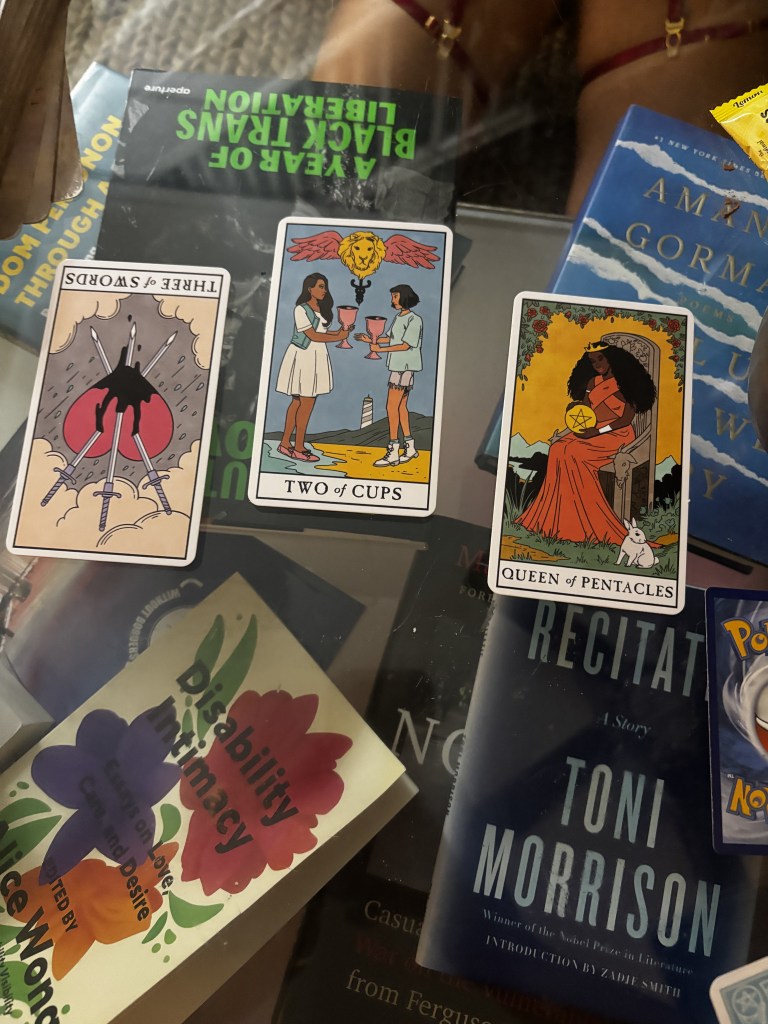
    the new moon in pisces is about relationships. “how do you want to be loved?” the pattern asks me.

    when your chart is dominated by libra placements, your whole life can become about your relationships. if i’m not careful, i become lost in relationships, creating a pressure on my friends and loved ones to show up for me in the ways i show up for them, instead of noticing when it’s me who needs to show up for me.

    in the past, i called myself solopolyamorous. after repeated experiences of abuse, i needed to nurture my relationship with myself. i needed to get back in touch with who i was and what i wanted outside of what others wanted for and from me. i learned to value multiple kinds of relationships with others: relationships that allowed me to explore my sexual desires, relationships that stimulated me intellectually, relationships that made me laugh, relationships that made me feel cared for, relationships centered around children, relationships focused on collaborative projects, relationships with people i could talk to on the phone for hours.

    but at the start of last year, i began to question my identification with solopolyamory.

    i saw people around me immerse themselves in romance, in couplehood, and in doing life together, offering each other the level of care and communication i deeply craved. at times, i felt so let down by people who made commitments to me, and then chose to prioritize their romantic relationships over those commitments. and when i am hurt in relationships, i tend to ask myself: “what is my part? what can i take responsibility for? what can i do differently?” i know these are useful questions to ask myself, and i also know many survivors of child and intimate partner abuse grew up learning to dismiss our own needs and cater to the experiences, feelings, and needs of everyone around us. now i try my best to do both: honor my experiences, and communicate my feelings and needs to loved ones, while retaining my sense of agency–my belief that there are things within my control, things i can change and do to interrupt this cycle in my relationships.

    i wondered, “am i calling myself solopolyamorous because i’m avoiding intimacy?” i wanted to allow myself to deepen in relationships the way i saw the people around me doing. i wanted to learn to trust. i called it my chalant era, an era of committing myself fully to intimate relationships, an era of shouting from the rooftops that i love to love, i love to be a loverfemmeboy. and if my friends weren’t ready to do life with me then i couldn’t dismiss the possibility of deepening in romantic partnership just because of my ambivalence of romance as a concept. i wouldn’t keep chasing people; i would love who was ready and willing to love me. i would love as a practice, as an action, as a verb.

    i dated, i committed to relationships, i offered my presence and my care. i cocreated relationships thoughtfully, using the relationship smorgasbord as a template in both my friendships and romantic relationships. i was honest with partners, letting them know: i don’t really know if i get romance. i’d been engaging with dean spade’s work on the topic in recent years, and it’s resonated with me: i don’t want to fall in love, i want to create it and nurture it. i maintained boundaries where i needed them, too, though i noticed when relationships became more familiar over time, some of the boundaries i put in place would fall away.

    i deepened relationships, and in the course of deepening, i’d sometimes come to see a mismatch in needs or values i knew would lead to me getting hurt in a way the other person wouldn’t know how to repair. it’s led me to reflect on how much alignment i need — in lifestyles, in values, in lived experiences — to maintain connection. i wanted it to be a perfect math, but it was always just a moving target. people change over the course of knowing them, and we’re not always changing in the same direction. so i learned to let go, to shift relationships or end them when we were no longer aligned around what we each needed.

    i have never needed relationships to last forever to be meaningful. and also, in my longest term relationships, the friends and loved ones who have been in my life for 10, 15, or 20 something years, i notice there’s a lot of spaciousness to grow.

    what i know now is that, with a sagittarius in venus, i need a lot of freedom in relationships, and i need to trust my instincts about what i need instead of following what other people do. i need the space to honor myself, to allow myself to be bold in the service of my own vision, to allow myself to be independent and free spirited. i want to do life with the people i love, but i want to do life with me too.

    this weekend so far, i had a lingerie slumber party to celebrate my coparent’s birthday, and i meal planned and did face masks with the 11 year old, and i gathered with folks who are working to build more abolitionist systems of care in philadelphia, and i crafted zines with a neighbor friend, and i played a customized version of guess who with my two most beloved harm reductionists, and i have come back to understanding myself as solopolyamorous, someone who can experience intimacy in different ways in different relationships, and also needs to honor my intimacy needs in my relationship with myself. what i know now is intimacy takes many forms, and no form of intimacy requires me to lose myself in my relationships. instead, intimacy requires me to be honest about who i am and what i want.
  • becoming a weapon of mass construction

    relationships are incredibly important to me. when there’s little else i can count on, i pour my faith into my relationships to carry me through difficult times. i recognize relationships as critical sites of transformation, healing, and liberation work. my intimate relationships have also been sites of violence, betrayal, and trauma. oppressive systems shape our everyday lives, down to the ways we relate to each other. it’s in the air we breathe. as i wrote five years ago, i’m still learning to breathe in this polluted air and exhale in a way that heals. i’m sure this learning will be lifelong.

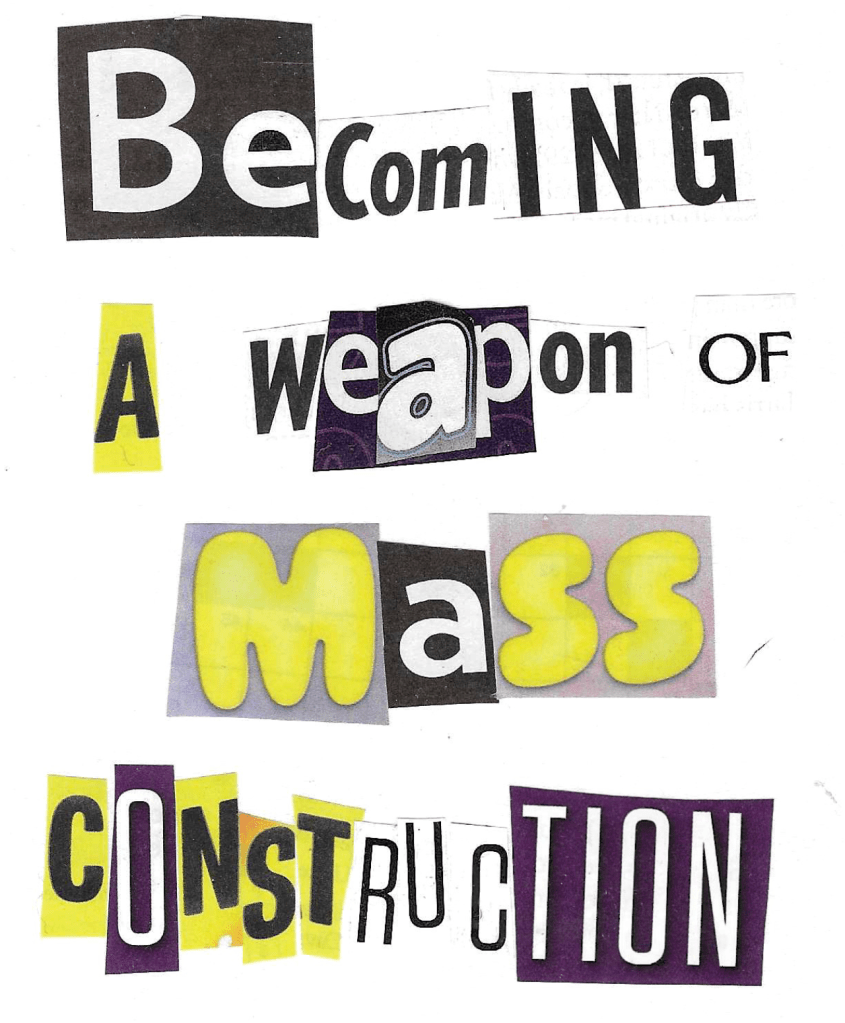
    i think about healing as interconnected with collective liberation. i’m guided in part by the words of assata shakur who said, “we must be weapons of mass construction, weapons of mass love. it’s not enough just to change the system. we need to change ourselves.” it’s not enough to know what we want to destroy and dismantle; we also have to envision, and learn, and practice what we want to create. this blog, relearning relationships, is a space where i hope to document some of my process of learning and practice. i hope it will be a space where i can share and learn.

    after being doxxed and relentlessly harassed for speaking out against abuse in organizing spaces in 2020, i needed to reevaluate my relationship to the internet. over the past few years, i’ve kept most of my thoughts in a written journal that’s just for me. i use my journal to process my experiences, clarify my values, keep myself accountable to those values, and document my growth. i use it as a reference point when i can’t remember things. i live with complex trauma and bipolar disorder, and for me that means some memories are difficult to access, especially when i’m activated or in a heightened mood state. journaling has been a grounding practice for me, so i’m keeping this practice up at home. i also miss sharing through online journals, because i love how they open me up to more connection, feedback, and growth. so, after five years, i’m back to sharing online through this blog: relearning relationships, where i’ll share about what i’m reading, what i’m reflecting on, and my practices for (re)learning ways of relating that i hope will move me/us closer to liberation.

    for those of you who are meeting me through this blog, hello! i’m zara. i’m a 35 year old Caribbean mama of Black & Arab descent. i’m a transformative justice practitioner and a conflict mediator with a libra stellium. i’m a longtime organizer and a survivor of intimate partner abuse, child abuse, and state violence.

    my name is a chosen name; it’s an homage to a loved one and to the surname passed down to me at birth. i use it to mark where i am now in my journey. as a survivor of child abuse who was displaced by the family policing system, running away is a strategy that has helped me survive again and again. in leaving behind the options that were offered to me by birth and by the state, i was able to create relationships, and especially friendships, unlike what i’d ever experienced. relationships where there was a mutual commitment to care, connection, justice, and reciprocity. and in recent years, i have felt a pull to return: return to the place of my birth, return to the lands and cultural practices of my ancestors, return to parts of myself that once felt like they needed to be hidden or cast away to survive to this point. it feels like i’m retracing my steps and the steps of my ancestors to gather all the missing puzzle pieces, to feel whole. my name, my chosen name, seeks to honor both where i’ve come from and what i’ve created.

    not all my relationships have been marked by this commitment to care and connection and justice and reciprocity. in my sexual and romantic relationships, i have repeatedly recreated/re-experienced the abusive/oppressive dynamics that were most familiar to me as a child. these repeat experiences, most recently in 2019, have led me to distrust my own desire, to interrogate romance, to pursue sexual relationships that feel more like friendships, and to have firm boundaries around sex with people i rely on for care. i haven’t made decisions about how much of this i want to change. for now, i just acknowledge that this is where i’m at right now.

    as a teen sex worker, my relationship to sex was intertwined with my access to housing and basic resources. i learned through my experiences that i needed to be desirable to get my needs met. i didn’t have a consistent or reliable parent figure, and what i learned from sleeping outside was that the only people willing to take me in were men who wanted to have sex with me. these were the people i relied on to buy me groceries and winter coats. at 18, when i first sought out therapeutic support to tend to my experiences of sexual trauma, it didn’t tend to this specificity: the problem wasn’t really sex; it was the vulnerability that came with being isolated, abandoned, and homeless. sex was my survival strategy, and surviving this way made me vulnerable to violation.

    i’ve often felt unguided and unsupported in my healing work; there are few spaces and practitioners that have made me feel seen and understood in my experiences of trauma caused by state and interpersonal violence. when i do find practitioners, i often don’t have the resources to continue to access them. i know this to be true for many others, and this is what led me into my own practice, and study, and creation of resources & wellness spaces. in 2024, i co-created a zine on criminalized survivors’ healing from the traumatic impact of state and interpersonal violence and for the past five years, i have collaborated with Sequoya Hayes on a healing justice project called the Safer Movements Collective.

    a lot of my own healing work happens through reading, study, and connecting with different practitioners that i’ve found supportive, especially Kesha Fikes at Somatic Extimacy, Siedeh St. Foxie at Parama Collective, & Leslie Priscilla at Latinx Parenting.

    there are two main books i’m reading right now about healing & relationships: healing sex: a mind-body approach to healing sexual trauma by staci haines and what it takes to heal: how transforming ourselves can change the world by prentis hemphill. both focus on embodiment, or coming into our bodies and feeling our sensations, as a pathway to healing and transformation. although it’s often white folks who are credited for somatics, or the study of bodies and the sensations we use to know how we feel or what we need, African and Indigenous communities have historically understood healing in this holistic way, as something that happens in the bodymind to use the language of disability justice collective Sins Invalid. i appreciate prentis hemphill’s writing that, “Somatics, in a way, is born from the original fracture that separates us all into feeling and non-feeling, wild and civilized.”

    all of that said, mindfulness, meditation, and embodiment haven’t always been possible for me. for many of us living with complex trauma, it isn’t safe to be embodied. we’re using every strategy we’ve got to escape feeling what we can’t bear or what we simply don’t have the resources – both internal & external – to tend to. prentis hemphill writes about this too; they write, “We numb with all the coping strategies we know: work, alcohol, drugs, sex, food, social media, and any other activity humans do that can be made into distraction or an eject button to leave our bodies.”

    in recent years, i’ve learned many ways we can build our internal resources to meet ourselves in the places where we hold pain: honoring the needs & experiences of our inner child(ren), play, rest, tapping into past experiences of joy. i really appreciated this 3-minute resourcing practice offered by camille sapara barton. and i know that these practices are limited: nothing resources us as well as having our material needs met, having housing stability, having food and light and community. so many of us are living so precariously that building our internal resources can sometimes feel so out of reach. we need a foundation to build on.

    i am grateful to have known people in my life who have found ways to resource themselves, to tap into joy and play and light, and keep themselves going in spite of barriers created by poverty/capitalism and intersecting oppressive systems. i’ll end this post by sharing about my dear friend nona conner, who passed away in 2021. she’d been through hell and still loved to light incense because it smelled nice, and read poetry because it lifted her heart, and dream about love and romance as though she’d never been hurt before. nona would often say, “be blessed and a blessing,” so i’ll leave you all here with those words. be blessed, and a blessing.